Imagine a doctor practicing in Gilgit, Tharparkar, Chitral, or a rural district of Balochistan. While medical knowledge continues to evolve rapidly, attending conferences, workshops, and Continuing Medical Education (CME) sessions may require long-distance travel, time away from patients, and significant personal expense. For many healthcare professionals across Pakistan, staying updated with the latest medical knowledge can be challenging despite a strong commitment to lifelong learning.
Yet the need for continuous learning has never been greater.
Healthcare is one of the fastest-changing professions in the world. New clinical guidelines, emerging diseases, advances in diagnostics, evolving treatment protocols, and growing patient expectations require healthcare professionals to continuously update their knowledge and skills. What was considered best practice a decade ago may no longer represent the most effective approach to patient care today.
The Changing Landscape of Medical Education
Traditionally, medical education relied heavily on classroom teaching, conferences, workshops, and hospital-based training programs. While these methods remain valuable, they are no longer sufficient on their own to meet the learning needs of modern healthcare professionals.
Over the past decade, digital technologies have transformed how people learn. Online platforms have made high-quality education accessible to millions of learners around the world, allowing them to access courses, lectures, and professional development opportunities regardless of their location.
The COVID-19 pandemic accelerated this transformation even further. Educational institutions, professional associations, and healthcare organizations rapidly adopted virtual learning models, demonstrating that quality education could be delivered effectively through digital channels. What began as a necessity has evolved into a preferred learning method for many professionals due to its convenience, flexibility, and accessibility.
Today, healthcare professionals increasingly expect learning opportunities that fit around their schedules rather than requiring them to step away from their clinical responsibilities.
Why Digital Learning Is Becoming Essential
Digital learning is no longer simply an alternative to traditional education—it is becoming an essential component of professional development.
Healthcare professionals often balance demanding clinical duties, administrative responsibilities, family commitments, and continuing education requirements. Online learning provides the flexibility to access educational resources at a convenient time, revisit recorded sessions, and focus on topics most relevant to individual practice needs.
Digital learning also helps address geographical inequities in access to education. A healthcare provider working in a remote community can now access many of the same educational resources as a provider working in a major urban center. This democratization of knowledge has the potential to strengthen healthcare delivery across the country.
Furthermore, digital platforms allow learners to engage with a wider range of educational formats, including recorded lectures, live webinars, self-paced courses, research publications, case discussions, and expert-led workshops. This flexibility supports different learning styles and encourages continuous engagement with professional development.
Introducing a Solution: Sehat Kahani’s Online Learning Platform (OLP)
Recognizing the growing need for accessible and continuous professional development, Sehat Kahani developed the Online Learning Platform (OLP) to support healthcare professionals in their learning journeys.
The platform serves as a centralized learning hub where healthcare providers can access:
- Structured online courses.
- Recorded CME sessions.
- Published research papers and academic resources.
- Live learning opportunities through webinars and CME sessions.
- Educational content designed to support evidence-based clinical practice.
By bringing these resources together in one place, OLP aims to make quality medical education more accessible to healthcare professionals regardless of where they live or work.
Beyond providing educational content, the platform seeks to foster a culture of lifelong learning, professional growth, and knowledge sharing among healthcare providers across Pakistan.
Looking Toward the Future
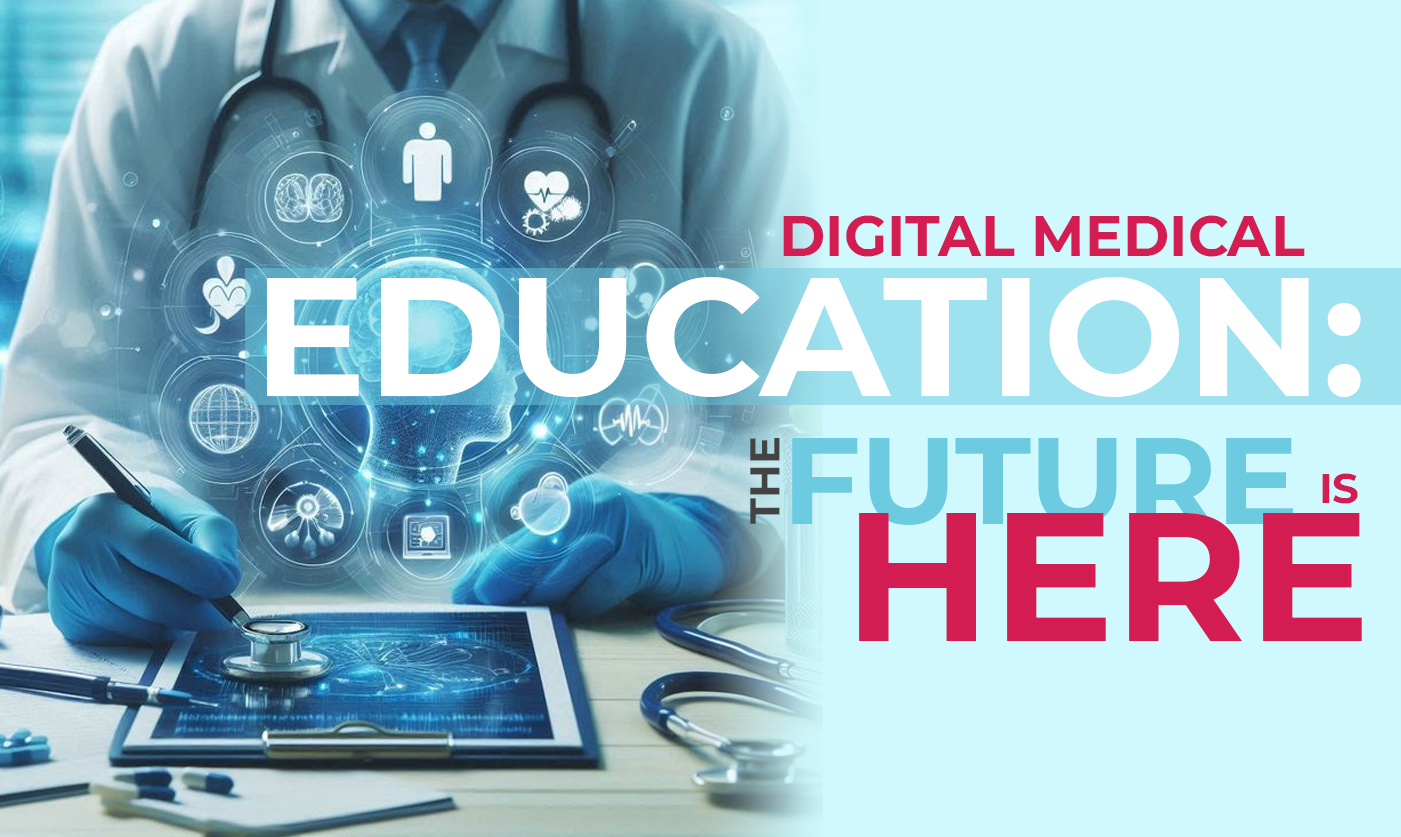
The future of medical education will be defined by accessibility, flexibility, and continuous innovation. As healthcare systems become increasingly digital, the way healthcare professionals learn must evolve as well.
Imagine a future where a doctor in a rural district has the same access to high-quality educational resources as a specialist in a major metropolitan hospital. A future where healthcare professionals can learn, collaborate, and grow without being limited by geography or scheduling constraints. A future where continuous professional development is available at the click of a button.
That future is already taking shape.
At Sehat Kahani, we believe that empowering healthcare professionals with knowledge ultimately leads to better patient outcomes and stronger healthcare systems. Through the Online Learning Platform, we hope to contribute to a future where quality medical education is accessible to every healthcare professional who seeks it.
Because when learning becomes accessible, healthcare becomes stronger.